Technology
Power 3D prints lithium-ion electrodes directly into custom geometries using aerosol jet printing (AJP) — turning battery manufacturing from a stamping process into a design tool.
The process
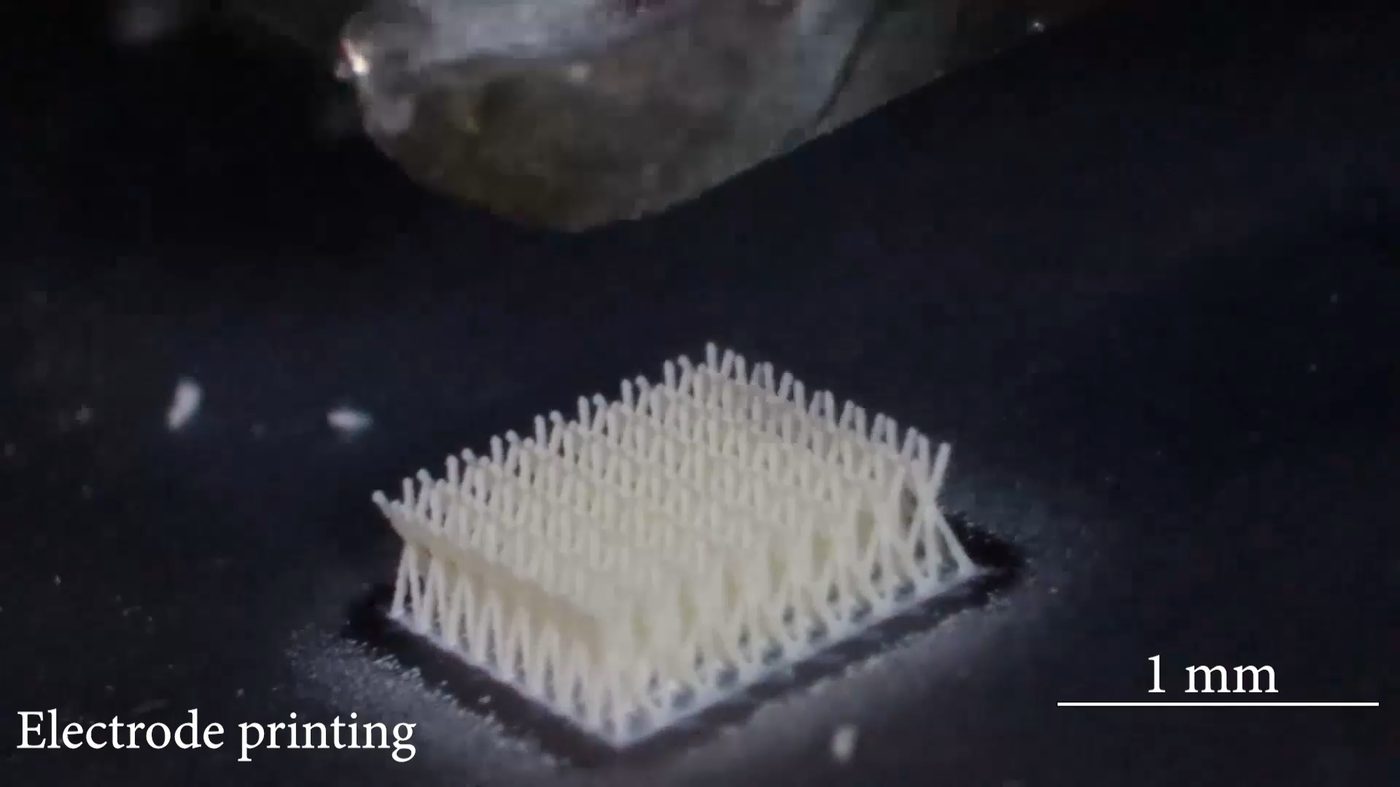
Conventional battery cells are made by coating and stamping — a process that only produces flat, rectangular electrodes in a limited range of thicknesses. Power 3D instead prints electrode material, layer by layer, directly into the shape and thickness a device actually needs.
Because the electrode is built additively, it can be printed thicker and denser than a stamped electrode allows, and into geometries — rings, curves, angled corners — that stamping can't produce at all.
What that unlocks
Why it's different
A fair look at how printed electrodes compare to the manufacturing approaches used across the battery industry today.
| Dimension | Power 3D | Slot-die (standard) | Custom-shape LiPo | Thin-film |
|---|
Honest assessment: cost per Wh and cycle life at scale are areas we're actively building out — our roadmap addresses both directly.
Built where the research happens
Power 3D's printing process was developed out of manufacturing research at Carnegie Mellon University and is backed by a National Science Foundation SBIR award. The team pairs additive-manufacturing research with hands-on battery engineering experience from the automotive and industrial battery world.
Meet the team